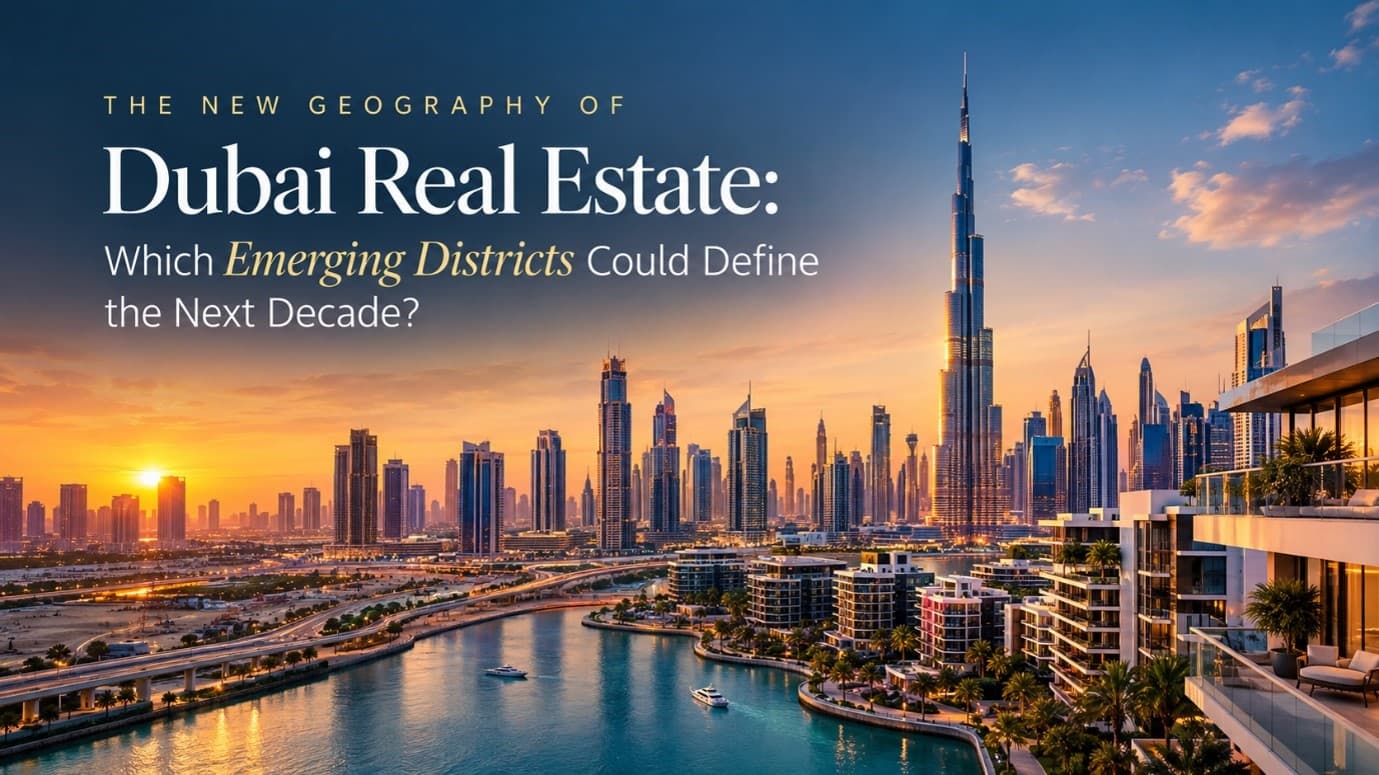
For years, the Dubai investment conversation revolved around a familiar shortlist: Downtown, Dubai Marina, Palm Jumeirah, Business Bay. These districts earned their reputation, and they still command premiums for good reason. But the city's growth doesn't stop at its established core. As population numbers climb past four million, infrastructure projects reshape commute times, and new master-planned communities move from renderings to handover, the map of where value is created in Dubai is quietly being redrawn.
At Oaklyn, we spend as much time studying transaction data in unfamiliar postcodes as we do in the districts everyone already knows. That's where the next decade of return is being built. This piece looks at the emerging areas Dubai investors are watching closely right now, why they're gaining ground, and how to tell a genuine growth corridor from a development that simply looks good in a brochure.
Why Dubai's Emerging Communities Matter More Than Ever
Dubai's real estate market has matured. Supply is broader, buyers are more informed, and the old assumption that any purchase near the city centre would appreciate on its own no longer holds. What has changed is the depth of opportunity outside the traditional core. Government-backed infrastructure, from metro line extensions to new road networks and airport expansion around Dubai South, is opening up areas that were, until recently, considered peripheral.
This matters for two reasons. First, entry prices in these new areas in Dubai are typically lower than in established districts, which widens the margin for capital appreciation as infrastructure and amenities catch up. Second, end-user demand is following the same trajectory as investor interest, families and young professionals are choosing these communities for space, value and lifestyle, which supports rental demand rather than just speculative resale activity.
The Districts Shaping Dubai's Next Growth Corridor
Dubai South
Anchored by its proximity to Al Maktoum International Airport and the Expo City Dubai legacy site, Dubai South has moved from masterplan to genuine economic hub. Its scale, logistics connectivity and alignment with the Dubai 2040 Urban Master Plan make it one of the more strategically significant future investment areas Dubai has to offer, particularly for investors with a medium to long-term horizon rather than those chasing a quick flip.
Dubai Creek Harbour
Positioned along the creek with direct sightlines to the city's skyline, Dubai Creek Harbour continues to attract attention as one of Dubai's most closely watched growth corridors. Waterfront positioning, planned retail and leisure infrastructure, and strong developer backing have kept demand steady even as other segments of the market cool.
Palm Jebel Ali and Dubai Islands
Both projects extend Dubai's coastline story into new territory. Palm Jebel Ali, several times the size of Palm Jumeirah, is still in its early phases, which means today's buyers are effectively entering ahead of the infrastructure and amenity build-out that will follow. Dubai Islands offers a similar early-stage proposition, with hospitality and retail components still taking shape.
The Oasis, The Valley and Ghaf Woods
These master communities represent a different kind of emerging property market in Dubai: family-oriented, villa and townhouse-led, and built around green space rather than tower density. Their appeal lies less in short-term speculation and more in steady end-user demand from residents who want space and community amenities without a Downtown price tag.
Meydan and MBR City
Closer to the established core but still developing, Meydan and MBR City continue to draw investors seeking a blend of luxury villas, apartments and green, integrated planning, with the added benefit of quick access to Downtown Dubai.
What Actually Separates a Genuine Opportunity From Hype
Not every emerging district deserves the label. Before treating any of these areas as a serious Dubai property investment area, we look at the same five filters with every client:
- Infrastructure timeline: Is the road, metro or airport connectivity already funded and under construction, or still theoretical?
- Developer track record: Has the master developer delivered comparable projects on schedule before?
- Supply discipline: How many similar units are entering the same micro-market in the next 24 to 36 months?
- Tenant and buyer profile: Is demand coming from genuine end-users, or almost entirely from investors reselling to each other?
- Resale liquidity: If you needed to exit in three to five years, is there an established secondary market, or would you be the first seller?
An area can score well on location and price and still be a weak investment if supply is overheating or if the connectivity it depends on is years from completion. This is precisely the kind of underwriting that separates a considered position from a speculative one.
How to Approach These Areas as an Investor
The right entry point depends entirely on what you're optimising for. An investor prioritising rental yield will weigh these Dubai upcoming areas differently to a family office looking for a ten-year capital appreciation play, or a first-time buyer who simply wants a home with room to grow. Off-plan pricing in these corridors can be attractive, but it also carries more delivery and timing risk than a ready property in an established district, which is why area selection needs to sit inside a wider investment strategy rather than stand alone.
This is also where independent advisory earns its place. Developer sales teams are, understandably, focused on their own project. An advisor who isn't tied to a single development can compare a Dubai South opportunity against a Creek Harbour listing against a Meydan villa on the same terms, using the same data, and tell you honestly where the strongest risk-adjusted return actually sits.
The Bottom Line
Dubai's emerging areas are not a side conversation to the main property market anymore, they are increasingly where the next decade of growth will be written. Districts like Dubai South, Creek Harbour, Palm Jebel Ali and the new wave of family-oriented master communities are attracting serious capital because the fundamentals, population growth, infrastructure investment and shifting buyer preferences, support it. The opportunity is real, but so is the need for discipline in how you select, time and structure an entry into any of these Dubai growth corridors.
If you're weighing an emerging district against an established one, or trying to work out which of these communities actually fits your strategy, Oaklyn's advisory desk can walk you through the transaction data behind each option, not just the pitch.


